Many people get an uncomfortable soreness or pain on top of the foot that can get in the way of everyday activities. It often appears when the foot has been strained carelessly, or when shoes don't give enough room and support. Some swelling or stiffness after a long day is common, and the discomfort can affect how you walk and how active you are. In daily life, the pain may show up after a long time on your feet or after activities that have strained the foot. That is why it helps to know what can be behind the discomfort, and how to look after your feet in general to ease the irritation.
Whether you are active and play sport or sit at a desk all day, pain on top of the foot can come on suddenly or build up over time. Sometimes everyday strain, for example from the wrong shoe size or weak foot muscles, makes the area more tender and at times swollen. Understanding how these signals from your foot arise can help ease the general discomfort and make your days more comfortable.
What is pain on top of the foot?
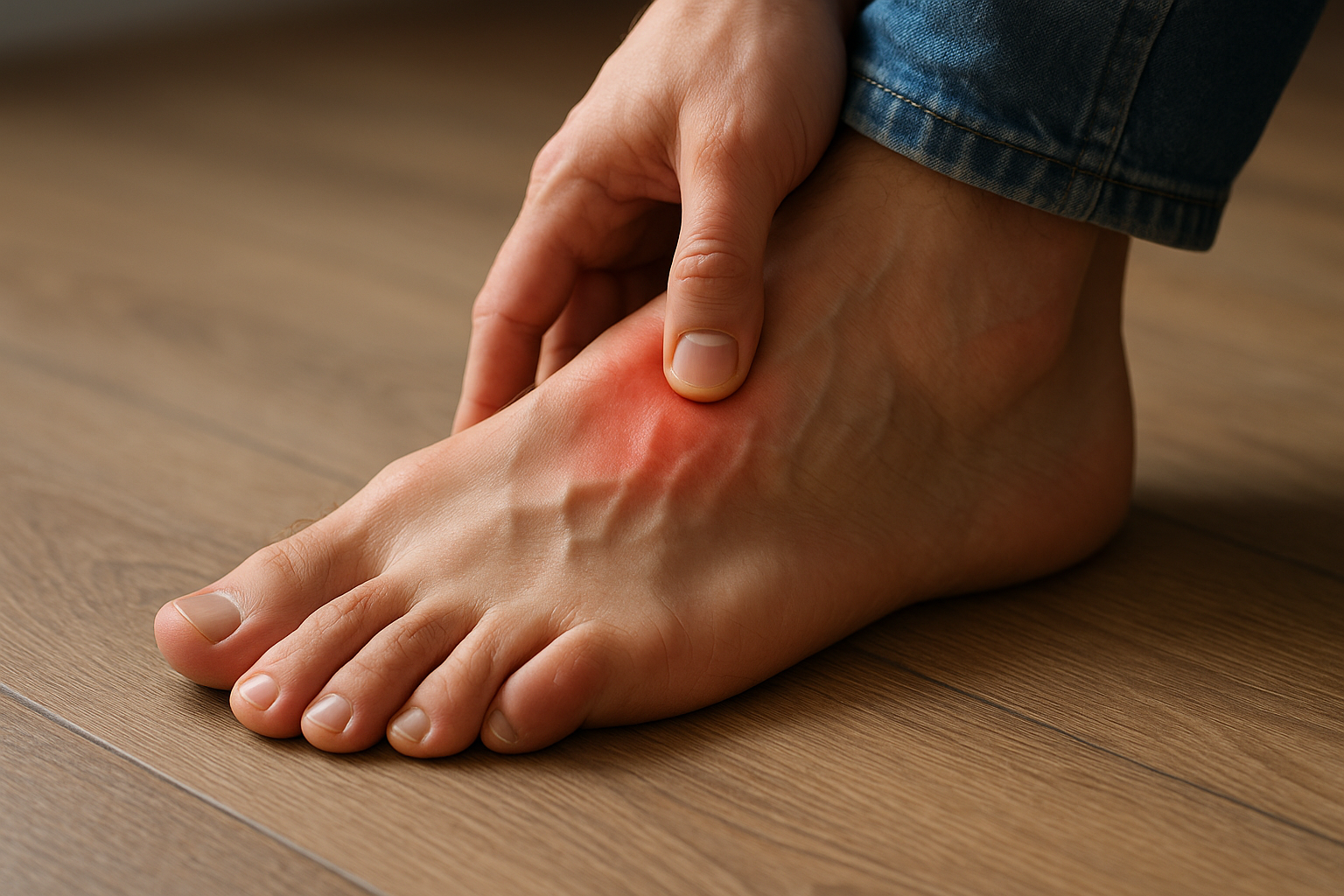
Pain on top of the foot means the upper part of the foot is tender, swollen or painful when you move. It can range from mild discomfort to more noticeable pain when you walk or put weight on the foot. Many find that the pain eases with rest but comes back as soon as they use the foot again. The discomfort is often linked to everyday activities, where the foot is strained in the wrong way or the shoes are not right for it.
The pain is usually felt on the top of the foot, where muscles and tendons lie close together. When they are put under repeated strain or pressure, they can become tender and swollen. This kind of pain often comes from overuse, which upsets the foot's natural movement and balance. It can also make everyday tasks harder, which is why many people look for the best way to ease the problem.
Knowing the basics of what lies behind pain on top of the foot makes it easier to cope with it in everyday life. It also helps you take the right precautions, so you can both prevent and relieve the kind of pain that comes from overloading the foot.
Causes of pain on top of the foot
Pain on top of the foot is often caused by irritated tendons and tense muscles on the foot and at the front of the shin. Shoes or laces that are too tight can press on one spot and cause discomfort, and repeated movements when walking or running can add to the strain on the top of the foot. Pressure on a nerve, from the surrounding tissue or from your shoes, can also cause a stabbing or tingling feeling, while swelling can make it hard to put shoes on without extra pressure.
How does pain on top of the foot feel?
The pain may feel like tenderness, warmth in one spot and stiffness, especially after a period of strain. Some people notice it more when they bend their toes upwards or when their laces are tied tightly. Others feel a slight tenderness after rest that gets worse once they start moving. When a nerve is under pressure, you may also notice changes in feeling, such as tingling or reduced sensation.
How common is it in everyday life?
Many people have pain on top of the foot at some point in their lives, both those who are very active and those who stand a lot at work. It often starts during a period when your activity changes or you switch to different shoes. It affects all ages: young, active people may feel pain after sport, while adults who stand for long hours at work often describe soreness at the end of the day.
What affects how strong the pain is?
Several everyday factors can affect how the pain feels: doing the same movements without variety, a sudden increase in activity, changes in weight and shoes made of stiff materials. Tight muscles in the calf and foot can pull on the tendons on top of the foot and make the discomfort worse. Lots of stairs or uneven ground can also put extra strain on the instep.
Where and how the pain is felt
The pain can range from a sharp, tender spot near the toes to a vague pressure in the middle of the instep or along the inside towards the ankle. Tenderness to touch, a tight feeling and stiffness can appear in the feet, ankles and legs at the same time. For some, the discomfort is most noticeable during activity, while others feel a constant tension that affects how they move and how they feel day to day.
What to look out for in everyday life
In your daily routine, small details can affect how discomfort on the instep develops over time. The materials in shoes and socks, seams, and pressure points from laces or buckles can cause irritation in one spot, while worn soles gradually change how your weight is spread. Warmth and moisture inside shoes can affect how comfortable your feet feel, and hard floors at work or in your free time can mean more repeated strain than softer surfaces.
Habits that can play a part
The movements you repeat every day often play a part in how the discomfort develops. Always standing or carrying weight the same way can change the strain over time, and wearing the same pair of shoes day after day means less variety in how your feet are loaded. Stress can show up as tighter muscles in the lower leg, which in some cases can add to a feeling of tightness on top of the foot.
- Seams and the inner finish of a shoe can cause irritation or pressure in one spot
- Worn soles often change where and how pressure lands on your foot
- Standing a lot at work or repeating the same movements without variety can affect the strain
- Bags or work tools can shift your weight and change how your feet are loaded
- Warmth and moisture in shoes can change how comfortable your feet feel
Look at the bigger picture
It can help to look for patterns rather than single episodes. Long-term habits and small, repeated strains can change how the area feels, and varying your shoes and the surfaces you walk on can make a difference to how symptoms develop over time. Many of our customers find that noticing when the discomfort comes gives them a clearer picture of what affects it in their daily life.
Frequently asked questions
Why can pain in the instep come and go for no obvious reason?
How strong the pain feels can depend on day-to-day changes in strain, footwear and how tense your body is. Small changes in your daily routine can make the discomfort feel different from one day to the next.
What can a tingling feeling on top of the foot mean?
Tingling can be linked to pressure on nerves or to irritated tissue. How it feels can depend on pressure, contact points and the materials in your shoes.
When is it normal for the pain to change during the week?
Changes during the week can be linked to differences in activity, switching shoes or your work routine. Noticing when the discomfort appears can help you understand which everyday factors play a part.
.