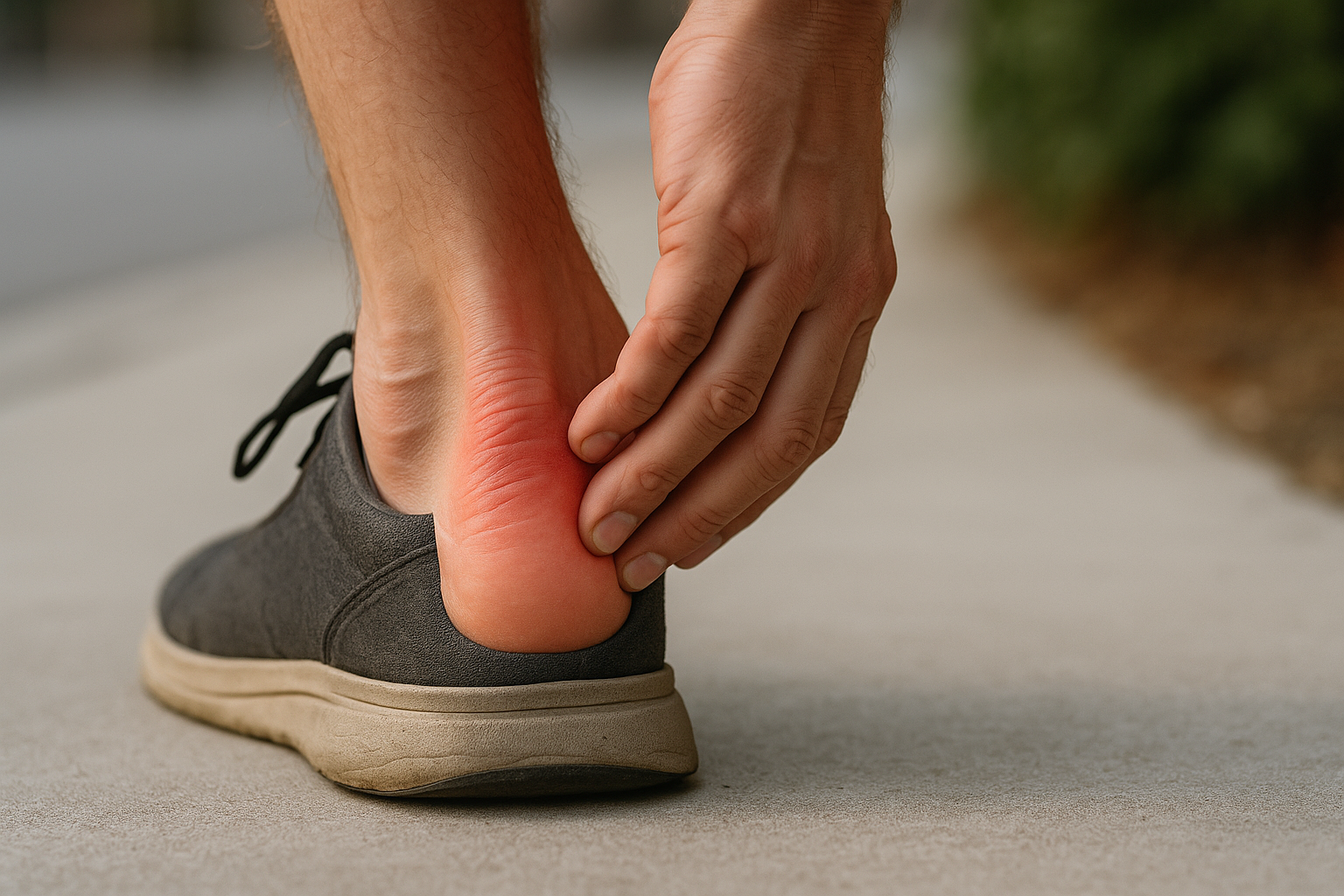
Many people live with pain at the back of the heel. It may come when they start moving, while they walk or after a long time on their feet. The pain can be unpleasant and affect both the way you walk and how comfortable you feel through the day. For some, the discomfort starts first thing in the morning, while others notice it most after work, exercise or long periods of standing. Pain at the back of the heel is often linked to repeated strain, pressure from shoes, or the way the body reacts when periods of rest and strain alternate.
For some, the pain is mild and passes. For others, it lasts longer and gets in the way of daily routines. The back of the heel is pulled on by the calf muscles and pressed on from the outside, which can make it especially sensitive. That is why many people want to know what can cause pain at the back of the heel and how it usually feels in everyday life.
Looking more closely, it becomes clear that there can be several explanations. For some, it is a clear reaction to the strain of the day; for others, it keeps coming back. Things to consider include:
- Repeated strain from walking, running or standing at work
- Pressure and rubbing from the back of your shoes
- Tight calves and Achilles tendons, which affect the heel area
What is pain at the back of the heel?
Pain at the back of the heel means pain and tenderness around the back of the heel, often close to the Achilles tendon. It can come on gradually or suddenly, and it feels different depending on strain, how active you are and your own circumstances. Many people notice it most when they move, but it can also be felt at rest.
The pain is often the body's reaction to repeated movement and strain, where tissue and tendons are pulled and pressed on over time. For people who have it regularly, it becomes part of everyday life and can affect both how comfortable walking is and which shoes they choose.
Common mechanical causes around the heel
Pain at the back of the heel is often linked to tightness or irritation in the Achilles tendon and the tissue around it. Repeated movements can increase tension in the tendon, which can lead to tenderness and discomfort. Shoes with a stiff back can make it worse, especially if they rub against the area all day.
Stiff ankles or tight calf muscles can also play a part, as they increase the pull on the heel when you walk or put weight on it. During more active periods, the area may therefore feel extra sensitive.
How does the pain usually feel?
Pain at the back of the heel can feel different from person to person. Some feel a stabbing or cutting pain when they move, while others have a duller soreness that lingers. The pain may be worst during the first steps after rest, or it may build gradually during the day.
For some, the discomfort eases once the body has warmed up; for others, it gets worse the longer the strain goes on. Sometimes the area is tender to the touch or slightly swollen, which can make shoes uncomfortable to wear.
How common is pain at the back of the heel?
Pain at the back of the heel is fairly common. It affects both active people and those who sit a lot at work. It can happen at any age and activity level, and it is often linked to changes in strain, shoes or daily routines.
The pain can also come together with tension elsewhere in the legs, particularly in the calves and ankles, where the overall strain affects the heel.
Different kinds of heel pain
Pain at the back of the heel can vary both in where it is felt and in how strong it is. Some feel it just at the back of the heel, while others notice it pulling up into the Achilles tendon or down towards the foot. It may be most troublesome when you first start moving, while you are on your feet, or as a soreness that lasts all day.
The pain may also feel sharp, pressing or burning. Because of these differences, it is not the same for everyone, and it can change over time depending on daily habits and strain.
.