Many people have discomfort in their heel, and when the pain won't go away, it's natural to look up where a heel spur actually sits. Heel pain can affect your everyday life. For many, it means an uncomfortable start to the morning and feet that simply feel less comfortable. Especially when you're more active than usual, it can be hard to tell what is really causing the discomfort. Many people notice that the pain eases after the first few steps, which can make it difficult to know whether there's a longer-term cause behind it. This kind of bony growth usually sits where a large tendon meets the heel bone, which is why it can be confusing if you feel both stiffness and pain in your foot.
It's not unusual to start feeling pain from a heel spur without realising it, at times when your feet are under more strain or the same strain again and again. Pain in the heel naturally raises questions: where exactly is it, and how does it differ from other foot problems? The symptoms are often worse when your foot has to carry your weight after a long rest, which is why many people want to understand what they're really dealing with. Knowing where a heel spur sits also makes it easier to find ways to cope with everyday strain and ease the discomfort.
What is a heel spur?
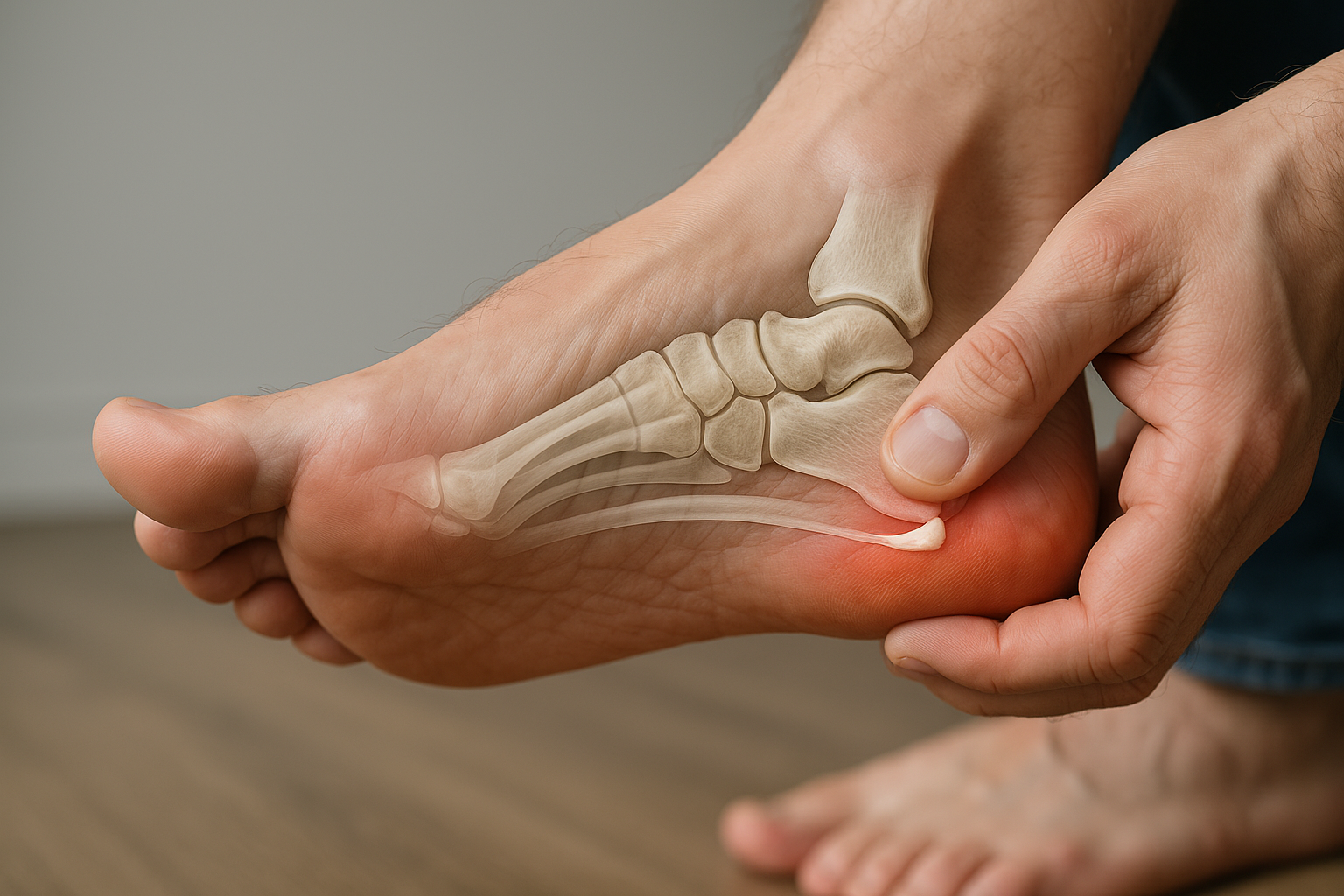
A heel spur is a small bony growth that forms at the front of the heel bone, close to where a large tendon attaches to the foot. It can feel like a hardened calcium deposit and is often easier to see on an X-ray. It is sometimes mistaken for inflammation of the tendon, as both usually cause pain, especially with the first steps in the morning. Common signs of a heel spur include:
- A growth where the large tendon under the foot attaches
- Pain that is often felt at the start of the day and eases as you move
- It is often mistaken for inflammation where the tendon attaches
It helps to understand that a heel spur is a change in bone growth, not an inflammation as such. So even though the symptoms can be similar, how you deal with the discomfort often depends on exactly where it sits and the kind of strain your foot is under in daily life.
Where is the pain usually felt?
The pain usually appears under and in front of the heel, close to where the plantar fascia attaches to the heel bone. Many people describe a sharp, stabbing pain with the first steps after rest. This may then ease and turn into a throbbing or pressing feeling when you walk for a long time or work on your feet. The pain can also spread towards the middle of the foot or up into the calf, and in some cases it changes how your whole weight is carried through your feet, legs and back.
How does it feel in everyday life?
In daily life, it often means that things involving a lot of standing or walking feel harder than usual. Getting moving in the morning can be particularly difficult, and short breaks can bring temporary relief. Repeated activity such as long walks or running can lead to more discomfort the next day. For people who stand a lot at work or walk on hard surfaces, the discomfort is often linked to how their feet are loaded during the day.
What often makes the pain worse
How much it hurts can depend on several things: more weight on the feet, long hours of standing at work, frequent running or repeated jumping, and shoes without enough support. Age also plays a part, as heel spurs become more common as we get older. Uneven loading, where your weight is spread unevenly along the edge of the foot, often means more strain on the heel and therefore more pain in daily life.
Muscle tension from a change in how you walk
When your heel hurts, you often change the way you walk to avoid the pain. This can lead to more tension in the calf and in the muscles under the foot, and over time it can also affect the muscles around the knee and back. You may feel the tension on the underside of the foot, in the calf muscles, and as stiffness in your back after being active for a while. This knock-on tension can make everyday movements less comfortable.
Easing the strain in everyday life
Easing the strain is often about changing how you load your feet in daily situations: standing for shorter stretches, changing position at work and choosing shoes that give more support when you walk. Putting less strain on your feet when the discomfort is worse can make it easier to keep enjoying being active. Paying attention to how your weight is spread as you walk can also ease tension in your feet, legs and back.
.