For many people, pain in the plantar fascia is part of everyday life. It may show up with the first steps of the day, while walking or after a long time on your feet. The pain can feel sore, tight or stabbing under the foot, and it can affect both the way you walk and how comfortable you feel during the day. For some, the discomfort starts in the morning after rest, while others notice it most after work, exercise or many hours on their feet. Plantar fascia pain is often linked to repeated strain and the way the foot is used day to day.
Some people describe the pain as mild and short-lived, while others have more lasting problems that get in the way of their daily routines. The plantar fascia plays a central role in how the foot works and keeps you stable, so when it starts to send signals, attention often turns to strain, footwear and movement. That is why many people want to know what plantar fascia pain may be linked to and how it usually feels in everyday life.
When people look more closely at their plantar fascia pain, many point to things such as:
- Repeated strain from walking, running or working on your feet
- Too little variety in everyday movement
- More strain after a change in activity level
What is plantar fascia pain?
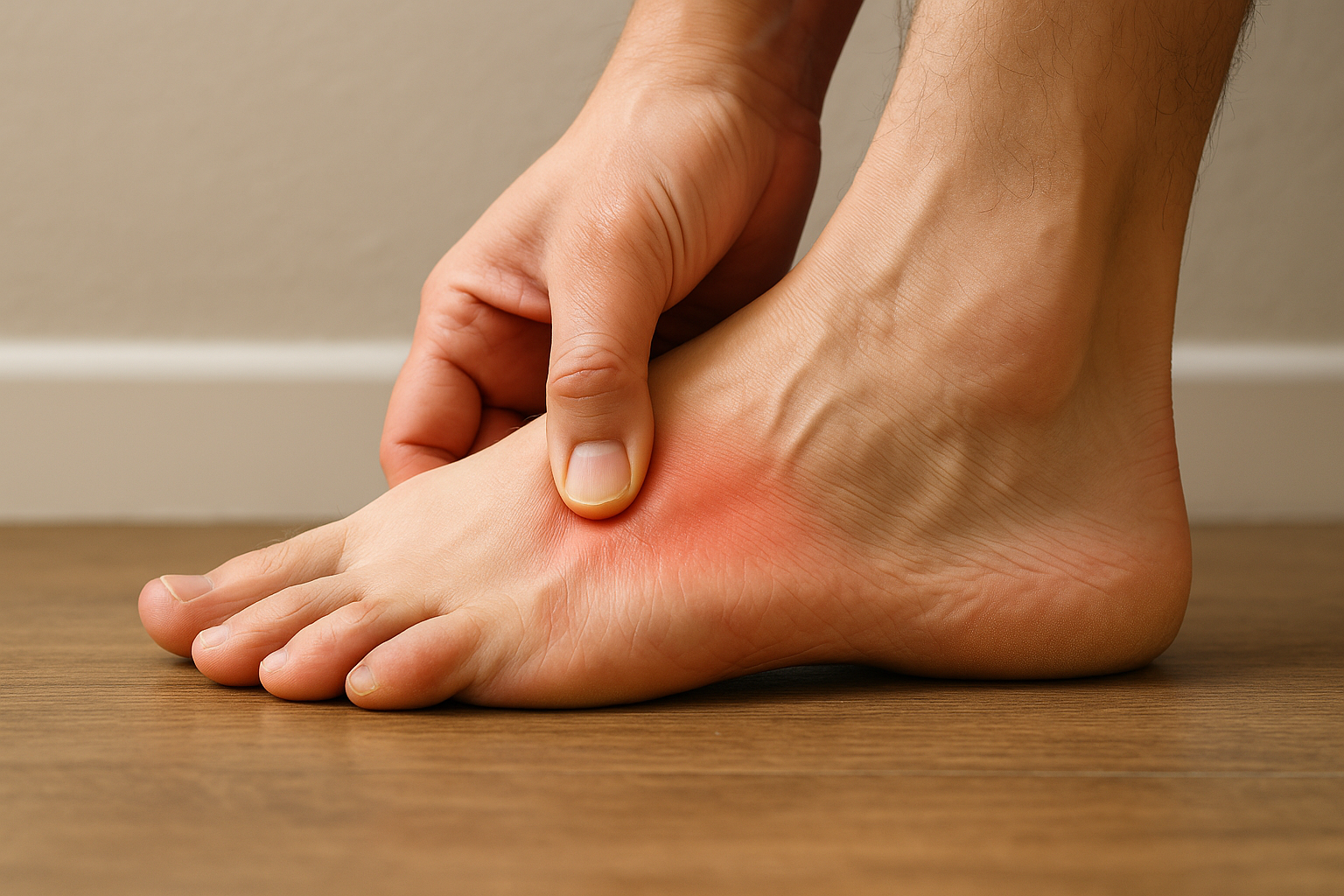
Plantar fascia pain means pain and tenderness along the underside of the foot, often from the heel towards the front of the foot. It can build up gradually or become noticeable after periods of extra strain. Many people feel it mainly when they move, but it can also be there at rest.
The pain is often linked to how the body reacts to repeated movement, as the plantar fascia is pulled and loaded throughout the day. When this happens again and again over time, the area can become more sensitive and cause discomfort in everyday life.
Common mechanical factors around the plantar fascia
The plantar fascia is under strain every day as the foot carries your body weight. Repeated movements such as walking and running can increase the tension in it, especially if the strain is one-sided or goes on for a long time. Over time, this can lead to tenderness and a tight feeling under the foot.
How flexible your foot is and how tense the surrounding muscles are can also play a part. Tight calves or stiff ankles can increase the pull on the plantar fascia and make the area more sensitive under strain.
How does the pain usually feel?
Plantar fascia pain can feel different from person to person. Some feel a sharp or stabbing pain with the first steps after rest, while others have a duller, more lasting soreness that builds up during the day. It is often most noticeable under strain, but it can also feel like tension or tiredness under the foot.
For some, the discomfort eases once the foot is warmed up and moving, while for others it gets worse after a long period of activity. In some cases, the area can feel tender when pressed, which can affect your choice of shoes and how comfortable it is to walk.
How common is plantar fascia pain in everyday life?
Plantar fascia pain is fairly common and affects both active people and those who sit a lot at work. It is seen at all ages and activity levels and is often linked to changes in strain, routines or everyday movement.
Many find that the pain comes and goes, depending on how much strain the foot is under in daily life and how well it recovers between active periods.
How plantar fascia pain can vary
Plantar fascia pain can vary both in how strong it is and where you feel it. Some feel the discomfort close to the heel, while others feel it more in the middle of the sole or as a pulling feeling along the arch. The pain can feel sharp, pressing or burning, and it can change over time.
Because of this, plantar fascia pain is not the same for everyone, and it can change with daily habits, strain and movement. Over time, many people notice patterns in when the pain comes on and when it eases, even if there is not always one clear explanation.
.